
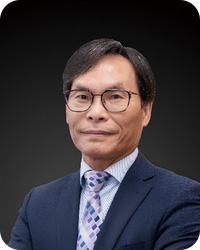
Prof. KWONG Sam Tak Wu (IEEE Fellow)
Lingnan University, HKSAR, China
Title of Speech: AI in Image and Video Processing
Abstract: This presentation will explore the application of artificial intelligence across consumer electronics, image processing, and evolutionary computation, highlighting the speaker’s award-winning contributions. It begins with his 2024 Second Place recognition in the prestigious IEEE Chester W. Sall Memorial Awards for impactful research published in IEEE Transactions on Consumer Electronics. This work leverages AI for COVID-19 screening by automating lung infection segmentation in CT scans—an essential tool that provides critical support to medical professionals.
Another key contribution presents the first comprehensive perceptual study and analysis of underwater image enhancement using a large-scale real-world image dataset. In this work, the Underwater Image Enhancement Benchmark (UIEB) was constructed, comprising 950 real-world underwater images, 890 of which have corresponding reference images. The remaining 60 images, for which satisfactory reference images could not be obtained, are treated as challenging data. Utilizing this dataset, a thorough qualitative and quantitative evaluation of state-of-the-art underwater image enhancement algorithms was conducted. This groundbreaking research earned the IEEE Signal Processing Society’s 2025 Best Paper Award for advancing benchmark datasets and novel enhancement techniques.
Finally, the presentation will delve into his co-authored paper, “Learning-Aided Evolution for Optimization,” which was honored with the 2026 IEEE Transactions on Evolutionary Computation Outstanding Paper Award.
Biography: Professor KWONG Sam Tak Wu is the Associate Vice-President (Strategic Research), J.K. Lee Chair Professor of Computational Intelligence, and the Dean of the School of Graduate Studies. Professor Kwong is a distinguished scholar in evolutionary computation, artificial intelligence (AI) solutions, and image/video processing, with a strong record of scientific innovations and real-world impacts. Professor Kwong is one of the most highly cited researchers by Clarivate in 2022, 2023 and 2024. He has also been actively engaged in knowledge transfer between academia and industry. He was elevated to IEEE Fellow in 2014 for his contributions to optimization techniques in cybernetics and video coding. He was the President of the IEEE Systems, Man, and Cybernetics Society (SMCS) in 2021-22. He is a fellow of the US National Academy of Inventors (NAI), the Canadian Academy of Engineering, and the Hong Kong Academy of Engineering (HKAE). Professor Kwong has a prolific publication record, with over 500 journal articles and 160 conference papers, and an h-index of 102, as per Google Scholar. He is a highly cited researcher from 2022 to 2025.
In 2024, he was awarded Second Place in the IEEE Chester W. Sall Memorial Awards for his work published in IEEE Transactions on Consumer Electronics. He has also received the IEEE Signal Processing Society (IEEE SPS) 2025 Best Paper Award for his research paper titled “An Underwater Image Enhancement Benchmark Dataset and Beyond,” published in IEEE Transactions on Image Processing. Additionally, he was honored with the 2026 IEEE Transactions on Evolutionary Computation Outstanding Paper Award for his co-authored paper, “Learning-Aided Evolution for Optimization.” He currently serves as an associate editor for several leading IEEE Transactions journals.
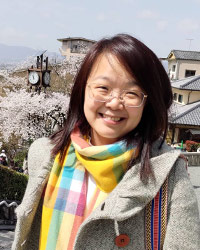
Prof. Chiu-Lin Lai
National Taichung University of Education, Taiwan ROC
Title of Speech: The Triple Symbiosis: Cultivating Higher-Order Thinking and Human Agency in the AI Era
Abstract: This keynote proposes a "Triple Symbiosis" framework to examine the interactive and reciprocal relationships among teachers, students, and AI within educational settings. The talk is structured around three practical dimensions. First, from the teachers' perspective, the focus is on translating pedagogical methodologies into AI configuration. It covers how teachers integrate General AI and instructional strategies, and how they embed educational scaffolding theories into prompts to construct custom AI agents. Second, regarding student engagement, the presentation shares the outcomes of a large-scale national initiative in Taiwan, examining how AI-assisted systems support students' self-regulated learning. Furthermore, it discusses the impact of student agency on the effective utilization of AI to achieve higher-order thinking. Finally, this address discusses "Human Resilience" and "Human Agency" within AI-assisted environments. It illustrates how students employ metacognition and self-regulation to foster their academic and personal well-being, thereby directly addressing the core theme of the conference: "AI for Humanity."
Biography: Dr. Chiu-Lin Lai is a Professor in the Bachelor Program of Interdisciplinary Studies at National Taichung University of Education, Taiwan. Her expertise includes technology-enhanced self-regulated learning, artificial intelligence in education, digital learning, mobile and ubiquitous learning, technology-enabled teacher professional development, and learning process and behavior analysis.
She has published more than 96 papers related to digital learning, including 36 SSCI-indexed journal articles. Since 2021, she has been listed among the World’s Top 2% Scientists by Elsevier, and in 2025 she was included in both the career-long and single-year impact lists. She currently serves as Associate Editor of Educational Technology & Society (ET&S).
Dr. Lai is also the principal investigator of several national projects in Taiwan, including initiatives on technology-enhanced self-regulated learning for senior high schools, digital learning enhancement, and digital teaching lecturer communities. Her work aims to advance the meaningful integration of digital technologies and artificial intelligence into teaching, learning, and teacher professional development.
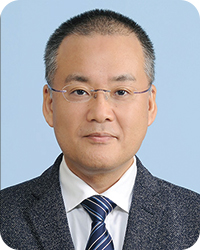
Prof. Kiyoshi Kawahara
Takushoku University, Tokyo, Japan
Title of Speech: What AI Can Do Beyond Intelligence: Mediating Self-Care and Mutual Care through Language
Abstract: Recent advances in generative AI have dramatically improved machines' ability to process information, generate language, and solve problems. However, many of the most important human challenges—such as illness, grief, loneliness, anxiety, and interpersonal conflict—cannot be resolved through problem-solving alone. They require dialogue, reflection, meaning-making, and care.
This keynote explores what AI can do beyond intelligence by examining its role in mediating self-care and mutual care through language. Drawing on student survey data and real-life cases, including support for a friend diagnosed with cancer and a colleague experiencing workplace distress, the presentation argues that AI should not be understood as a caregiver, but as a technological mediator supporting human reflection and communication.
The theoretical framework integrates McLuhan's media theory, Don Ihde's technological mediation, care ethics, and meaning-making theory. Rather than asking whether AI can replace human care, the keynote examines how AI reshapes human engagement through language and pragmatics.
The presentation also addresses the ethical challenges of digital colonialism. As AI increasingly standardizes communication and problem-solving, culturally diverse ways of caring may also become standardized. Such digital colonialism may become self-colonialism as users internalize AI's communicative norms.
The keynote concludes by proposing a care-oriented AI literacy that enables people to engage critically with AI while preserving cultural diversity, human presence, and the uniquely human capacity to create meaning and care for one another. Ultimately, the future of AI depends not only on advances in intelligence, but also on our capacity to cultivate human understanding, self-care, and mutual care in an AI-mediated world.
Biography: Dr. Kiyoshi Kawahara (KAWAHARA, Kiyoshi) is Professor in the Faculty of Foreign Languages at Takushoku University and Chair of English Education in the Graduate School of Language Education. His areas of specialization include Interpreting and Translation Studies, Cognitive Linguistics, and Language Education. He previously served as President of the Japan Association for Interpreting and Translation Studies and as Vice President of the Japan Association for Media English Studies. He has long been engaged in advancing language education research grounded in the theories and practices of interpreting and translation.
In recent years, his research has focused on models of language proficiency development based on interpreting and translation studies, exploring the potential of language education utilizing machine translation and artificial intelligence (AI). In particular, he has been working on both the practice and theorization of educational approaches that position generative AI as a tool for learning support and reflective practice, fostering learners' autonomous thinking and meaning-making.
In addition, drawing on his practical background as a Buddhist priest, he conducts interdisciplinary research on the relationship between language communication and care of the mind from a humanistic perspective that integrates spiritual care, philosophy of religion, philosophy of language, and clinical psychology. Based on this body of research, he has presented at academic conferences and delivered invited lectures at international seminars in Japan and abroad in the fields of English and Japanese language education, as well as interpreting and translation education. He is expected to acquire his second PhD on applied religious studies this year. His publications include Rethinking Translation Equivalence: Language, Society, and Thought in Translation, and co-authored works such as An Introduction to Media English Studies and An Accessible Guide to Translation and Interpreting Studies. His current research explores language as a medium of meaning-making, self-care, and mutual care in the age of artificial intelligence.
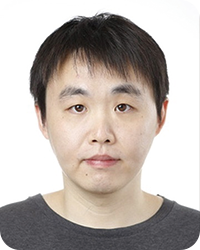
Mr. Zhenbin Zhang
Co-Founder & CTO, iNexus Inc., Tokyo, Japan
Title of Speech: Designing an AI Companion for Children's Programming Education: Lessons from Manande Puzzle
Abstract: Generative AI can make learning support more responsive, but designing it for young children requires more than adding a chatbot to an existing application. This talk presents Manande Puzzle, a block-programming learning platform for children with more than 36,000 registered users across five languages, and ManaPal, an in-app AI companion that provides conversational support and generates visual materials for children's creative projects.Using this deployment as a practice-based case study, I discuss three design challenges: producing safe and age-appropriate responses, integrating AI into a child-centered creative workflow, and balancing learning value, healthy use, and operational cost. I also share observations from product operation and user feedback, including questions raised by uneven engagement and by the challenge of helping children turn an idea into a finished work.
The talk concludes by translating these observations into research questions for industry-academia collaboration: how AI scaffolding affects learner agency, how its educational value should be evaluated, and what an AI companion should deliberately avoid doing for young learners.
Biography: Zhenbin Zhang is co-founder and CTO of iNexus Inc., a Tokyo-based EdTech company that develops digital learning products and AI-enabled systems for education. He leads the development of Manande Puzzle, a block-programming learning platform for children with more than 36,000 registered users across five languages, and ManaPal, its in-app AI companion for conversational support and creative image generation.
Before co-founding iNexus in 2021, Zhang developed IoT systems at Hitachi, Ltd. from 2013 to 2015, served as a lead engineer at the Tokyo startup Flicfit from 2015 to 2017, and worked on AI-based healthcare systems at Splink from 2017 to 2019. His experience spans large-scale industrial systems, startup product development, cloud infrastructure, and applied AI in education and healthcare. His current work focuses on designing generative AI features that are safe, age-appropriate, and useful in real-world learning environments.
He holds a Master of Engineering from Kyushu Institute of Technology, where he studied Applied Science for Integrated System Engineering in the Graduate School of Engineering. At iNexus, he also leads the development of educational and medical systems and participates in joint research with Takushoku University on learner motivation, learning difficulties, and programming education. Related work has been presented at conferences of the Japan Society for Educational Technology and at the International Conference on Education and Psychology 2025.

The Secretary office of EAIT 2026 will collect contributions and finish daily organizing work. If you have any question, please feel free to contact our conference secretary:
Ms. Sharon Chai
 |
 |
|---|---|
| APISE WeChat (Official Account) |
APISE WeChat (Consultation) |
Copyright © EAIT 2026 | www.eait2026.org